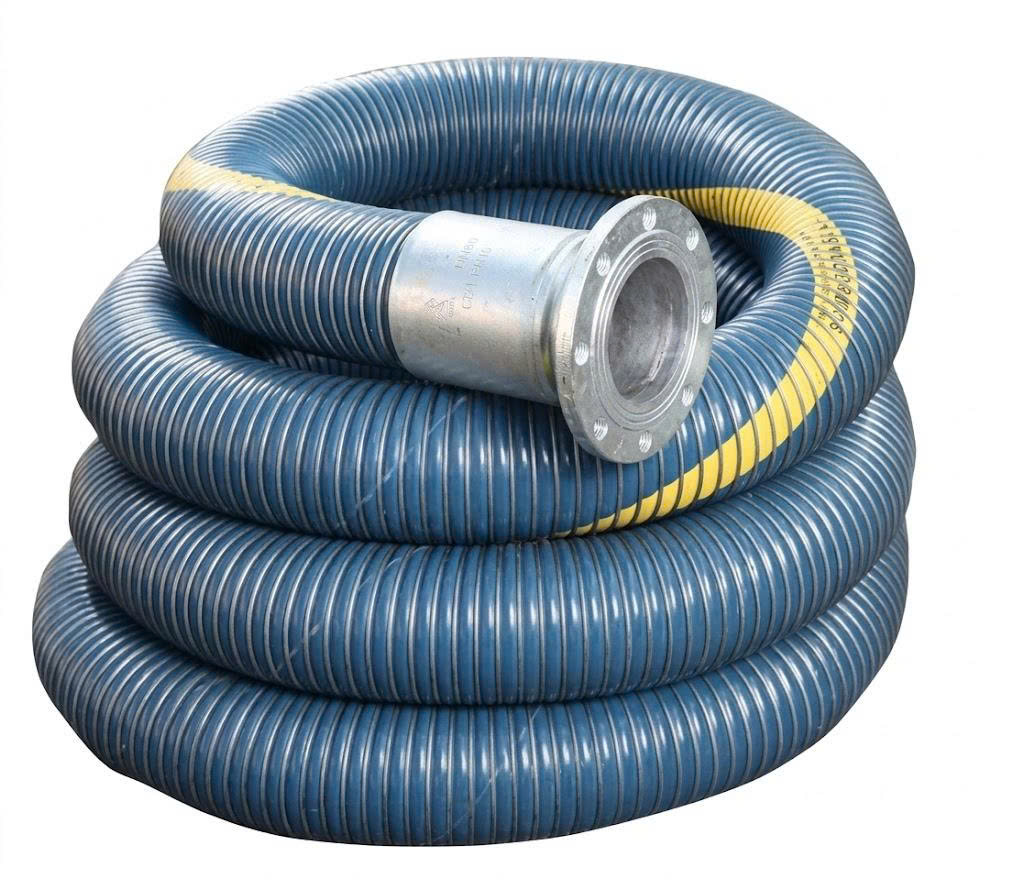
1. Product Overview
Composite pipes are manufactured from composite materials, consisting of two main components:
- Reinforcement (fiberglass or carbon fiber): Provides mechanical strength.
- Matrix (epoxy, vinyl ester, or polyester resin): Encases the reinforcement to resist chemical attack.
They are an ideal replacement for steel pipes in highly corrosive environments or where lightweight construction is required.
2. Standard Technical Specifications
| Feature | Technical Details |
|---|
| Matrix material | Vinyl ester resin (strong chemical resistance) or epoxy |
| Reinforcement | Multi-layer fiberglass |
| Diameter (Size) | DN25 to over DN3000 |
| Working pressure | PN6, PN10, PN16 up to PN25 |
| Operating temperature | -40°C to +110°C (depending on resin type) |
| Standards | ASTM D2996, ASTM D3262, ISO 14692 (for oil & gas) |
| Connection types | Adhesive bonding, flanged joints, or bell & spigot joints |
3. Why Choose Composite Pipes Over Steel?
Composite pipes offer significant advantages in specialized fluid transport systems:
- Absolute corrosion resistance: Immune to rust, oxidation, seawater, acids, bases, and petroleum compounds. No need for coatings or cathodic protection.
- Ultra-lightweight: About 1/4 the weight of steel pipes of the same size, reducing transport, installation, and support structure costs.
- Smooth inner surface: Extremely low friction coefficient reduces pressure loss, prevents deposits and microbial growth, saving pump energy.
- Long service life: Can operate reliably for over 50 years in harsh conditions with minimal maintenance.
4. Key Features
- Electrical/thermal insulation: Non-metallic material provides excellent thermal retention and complete electrical insulation, safe in explosive environments.
- Flexible design: Resin composition and fiberglass weave can be customized for high-pressure or chemical-specific resistance.
- Impact resistance: Interwoven fiber structure withstands external forces and pump vibrations without brittle cracking.
- Eco-friendly: Production and operation have lower environmental impact compared to metallurgy.
5. Practical Applications
- Fuel pipelines: Especially crude oil lines, high-salinity produced water, or underground pipelines requiring corrosion resistance.
- Chemical plants: Transporting acids, solvents, alkalis, and aggressive liquids.
- Seawater treatment: Used in power plants, refineries, and desalination systems.
- Firefighting systems: Resistant to corrosion from impure water sources and durable in high-humidity environments.
Composite drawing
Đánh giá bài viết!