
Call center : 028 3622 9909 ( free ) - Customer care: 094 833 8155


140/28/35, Vuon Lai Street, An Phu Dong Ward, Ho Chi Minh City
Hotline: 096 616 5029
140/28/35, Vuon Lai Street, An Phu Dong Ward, Ho Chi Minh City

| Code | : BPA |
| Stock | : In stock |
| Guarantee | : 0 years |
| Price | : Contact |
| View | : 8121 |
Address: 140/28/35, Vuon Lai Street, An Phu Dong Ward, Ho Chi Minh City
Hotline: 0966165029 - Mr. Tài
Email: [email protected]
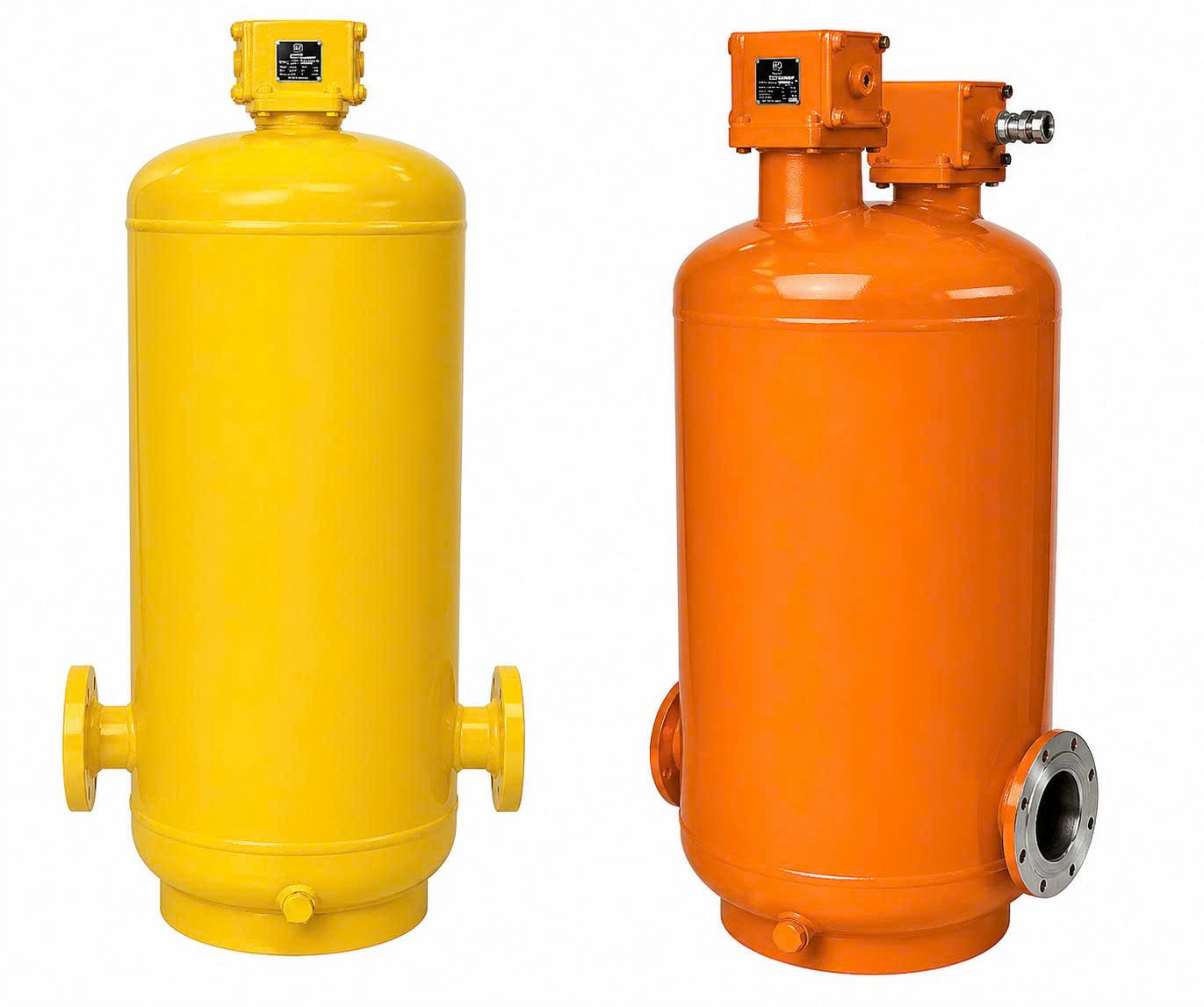
The Air Separator Tank is designed to remove a large amount of free air or vapor from liquid before it enters the measuring system. In the petroleum industry, when pumping from ships or underground tanks, air often mixes in due to vortex effects or pipeline leaks. The separator tank slows down the flow, allowing air bubbles to rise and escape, ensuring that only pure liquid passes through the flow meter.
| Feature | Technical Details |
|---|---|
| Body material | Carbon steel (A105/A216 WCB), Stainless steel 304/316 |
| Float & exhaust valve | Stainless steel 316, Viton or NBR seals resistant to petroleum |
| Design standard | ASME Section VIII (Pressure vessel standard) |
| Working pressure | 10 bar, 16 bar, or Class 150/300 |
| Size | DN50 (2″) to DN300 (12″) or larger upon request |
| Connection type | Flange (ANSI, JIS, DIN) |
Unlike small air release valves, the air separator tank provides higher-level system protection:


